
The vegetation of Ballesteros also grows under water
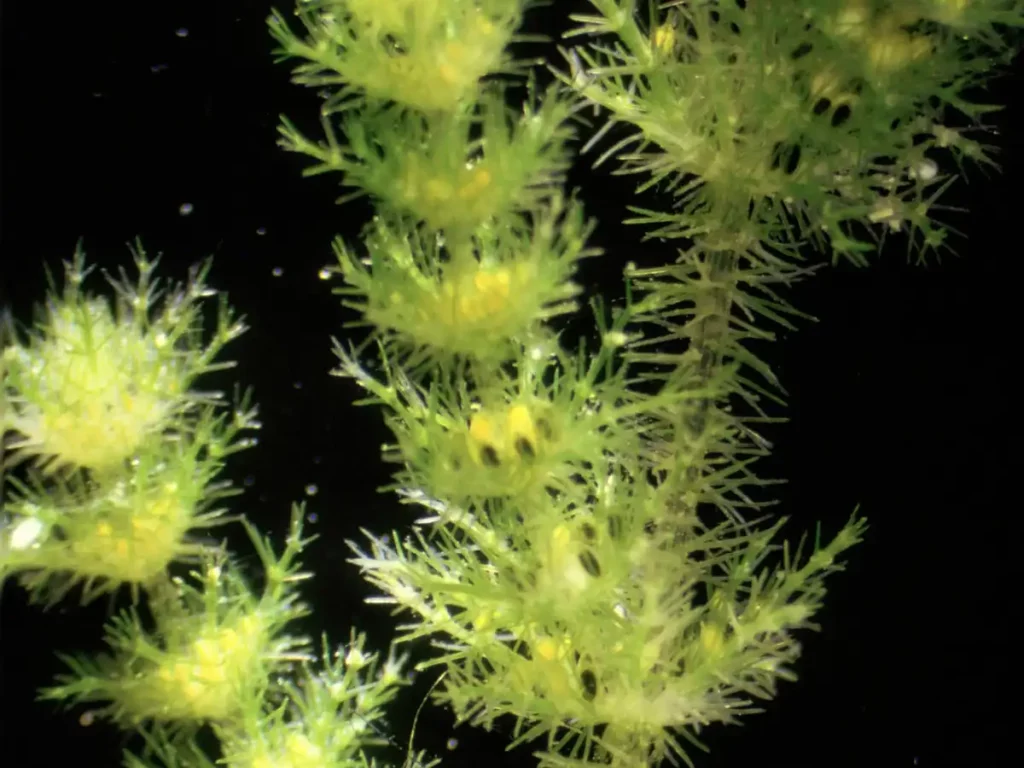
When we think of the plants in a wetland, our gaze usually focuses on the reeds and rushes on the shore. In the Ballesteros Lakes, however, an essential part of the vegetation lives submerged; it appears only for a few weeks or hides in forms so small that it can be overlooked even when we have it in front of us.
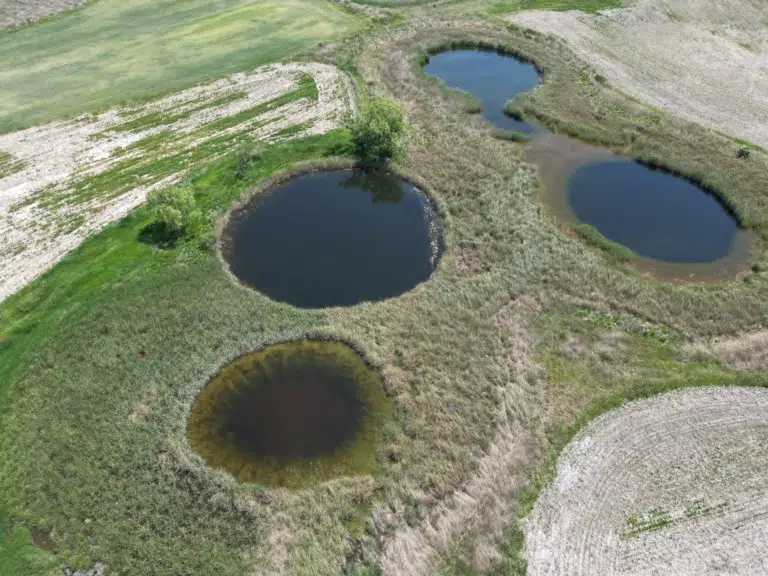
Each plant occupies a strip marked by depth and the length of time the water remains in the water. In flooded areas, marsh plants can develop, delicate plants that cover the bottom and provide shelter to numerous organisms. Closer to the shore, mosses, ferns and wet meadows appear. In temporary ponds, other species take advantage of the brief period following the water retreat to germinate, flower and release seeds before summer arrives.
Ballesteros’ historical documentation cites more than nine species of macrophytes, some of which are very rare. Their presence does not depend solely on the presence of water: transparency, nutrients, salinity, and the duration of flooding are also important. When eutrophication increases or the bottom receives less light, these meadows may recede. On land and on the banks, something similar happens: if the water regime changes, some communities gain space and others are reduced to small patches.
A particularly sensitive case is that of plants associated with the Mediterranean temporal lagoons, a priority habitat for the European Union. Among the species of interest in the complex is Apium repens, included in Annex II of the Habitats Directive and associated with soils that are flooded seasonally. Maintaining these communities does not consist in preserving a permanent water layer, but in allowing the sequence of flooding, descent and dryness to which they are adapted to repeat.
LIFE Ballesteros It plans to expand the area of natural habitats and produce 250,000 native plants to support the recovery of marshlands, aquatic vegetation, wet meadows, and riparian forest. But the planting will come after addressing the root cause: the functioning of water. Seeds and plants can help reconstruct the landscape; to stay, they first need to be given time and space.
 Spanish
 English
 French
 German
 Italian
 Portuguese