
How to tell dragonflies and damselflies apart
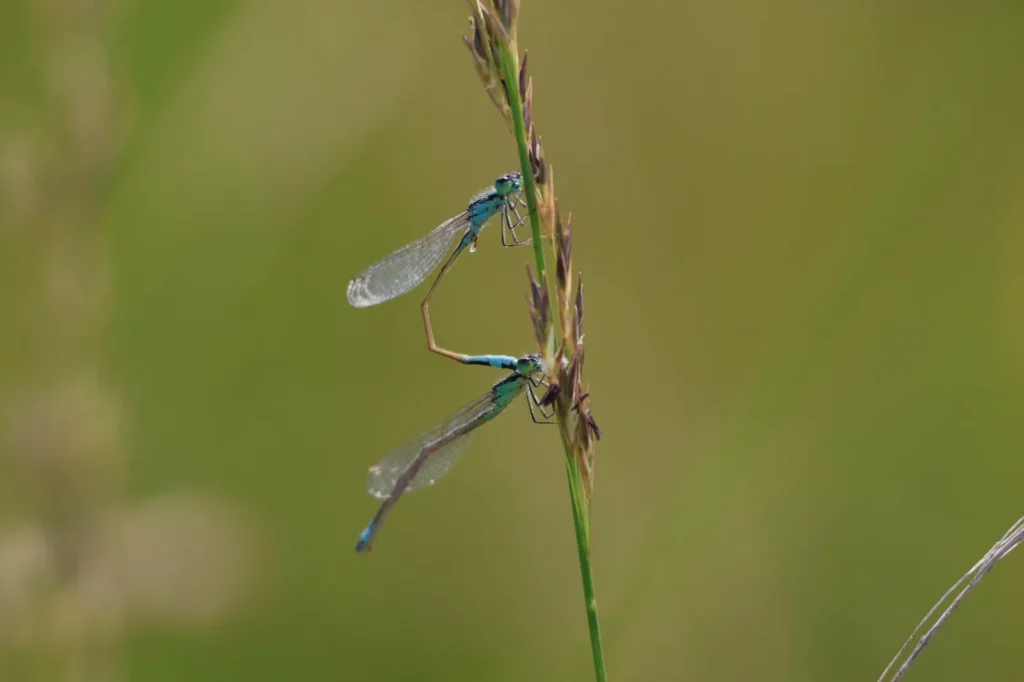
In the Ballesteros Lagoons, it is easy to find, during the warm months, small blue, red, or copper flashes among the vegetation. At first glance they may seem very similar, but not all of them are dragonflies: some are damselflies.
Both belong to the order Odonata, but they form two distinct groups. Dragonflies belong to the suborder Anisoptera and the damselflies to the suborder Zygoptera. To tell them apart, you don't need to be a specialist: it's enough to look for a few clues.
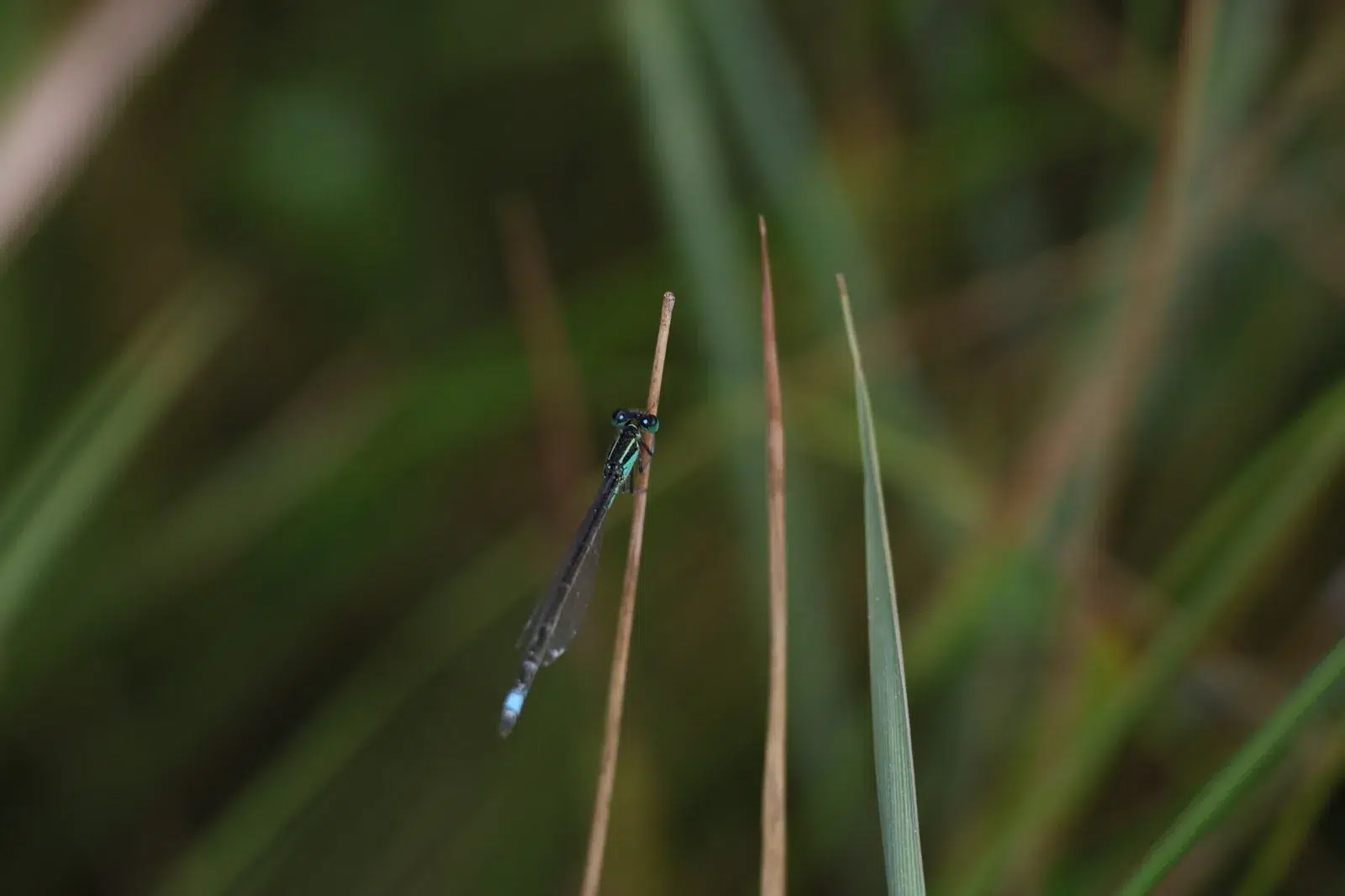
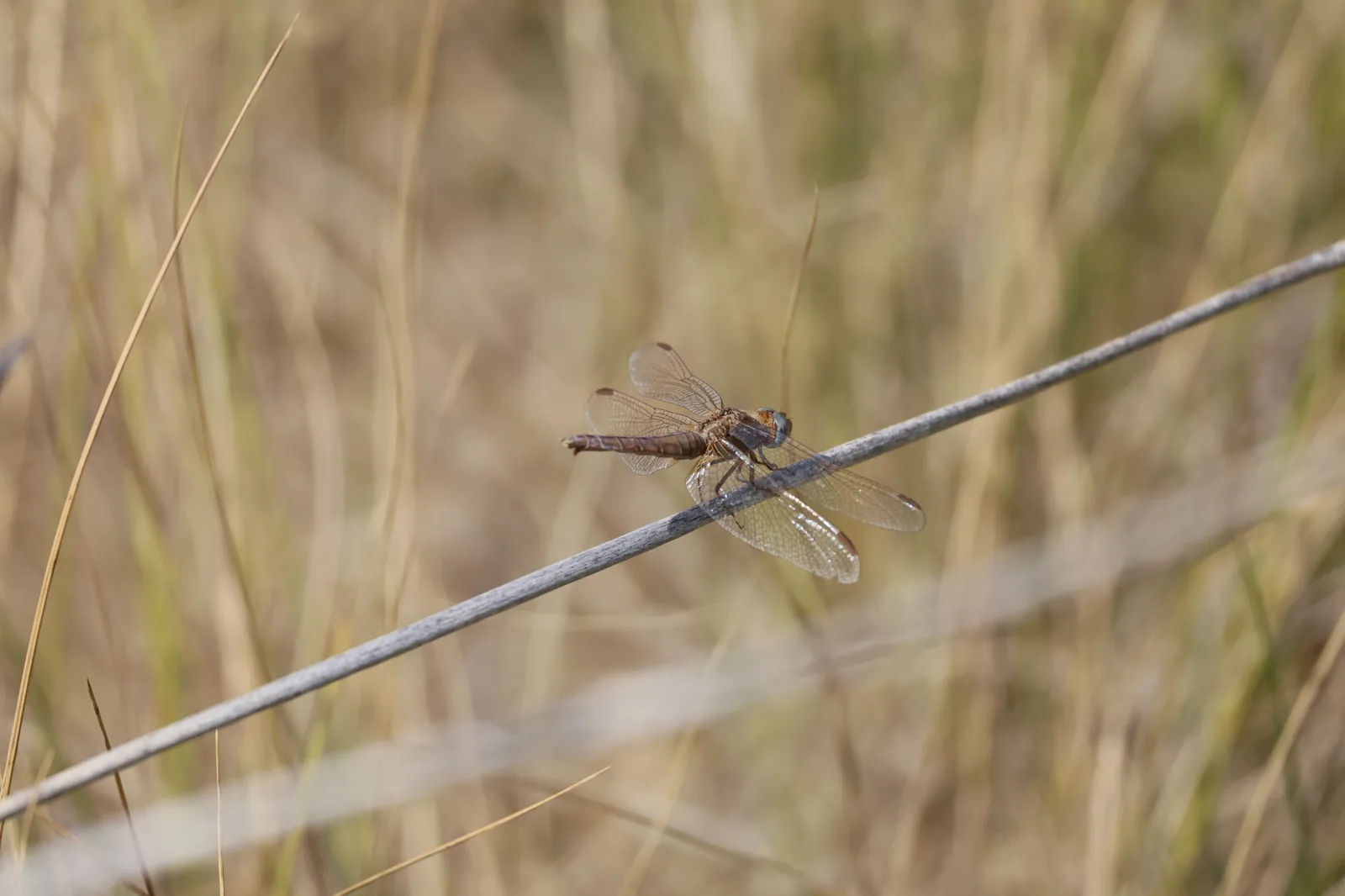
The easiest clue: how they position their wings
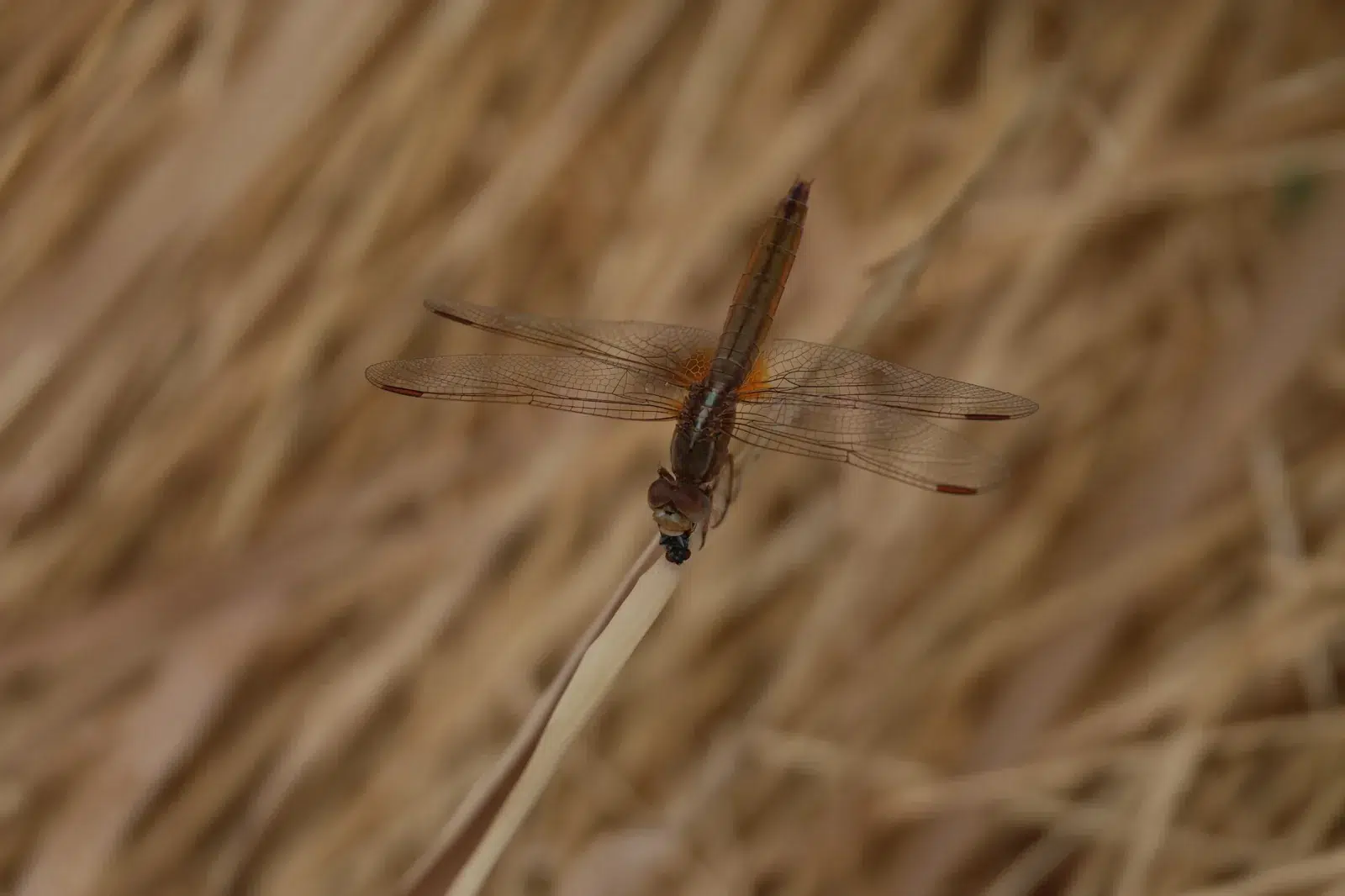
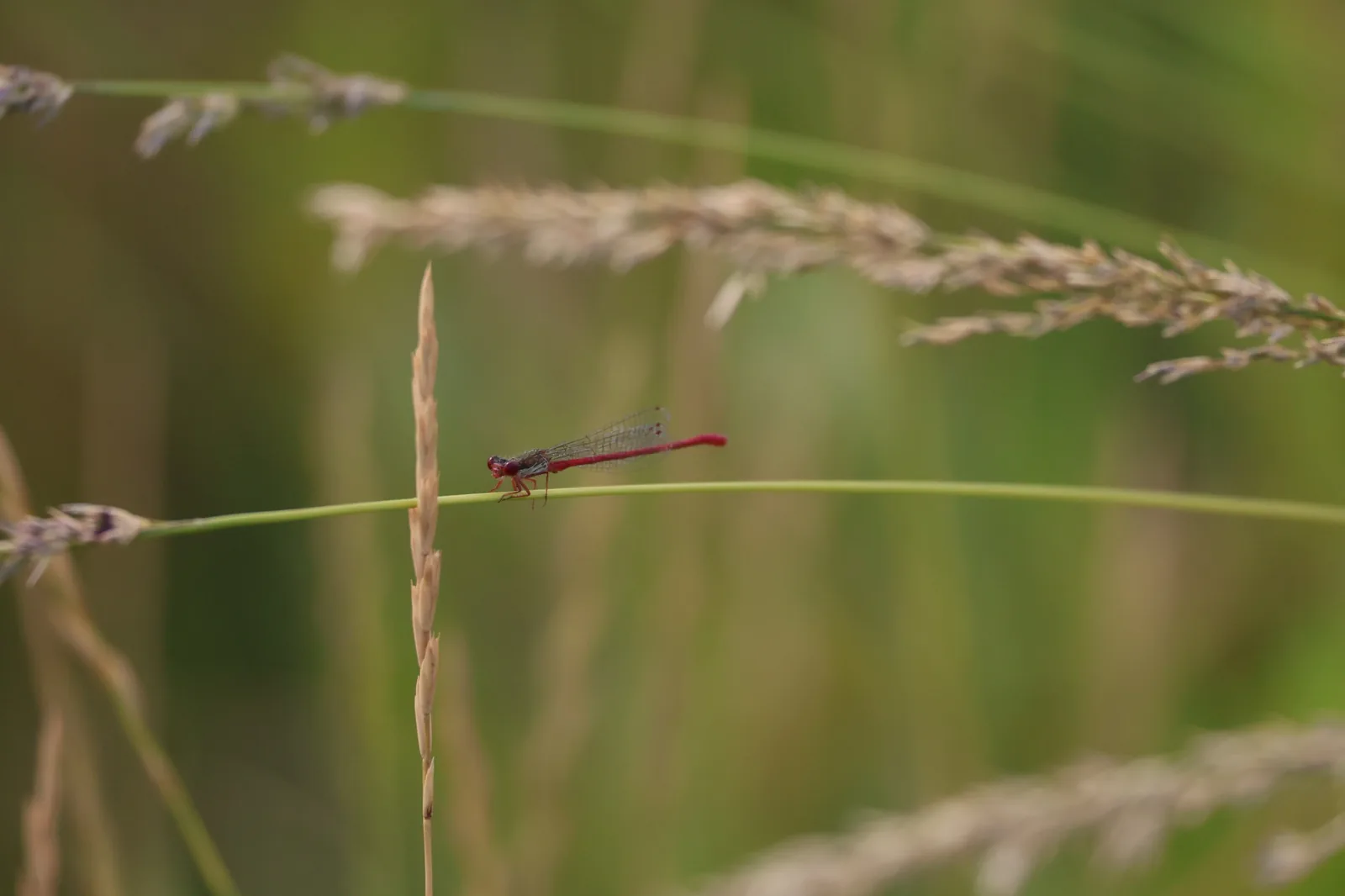
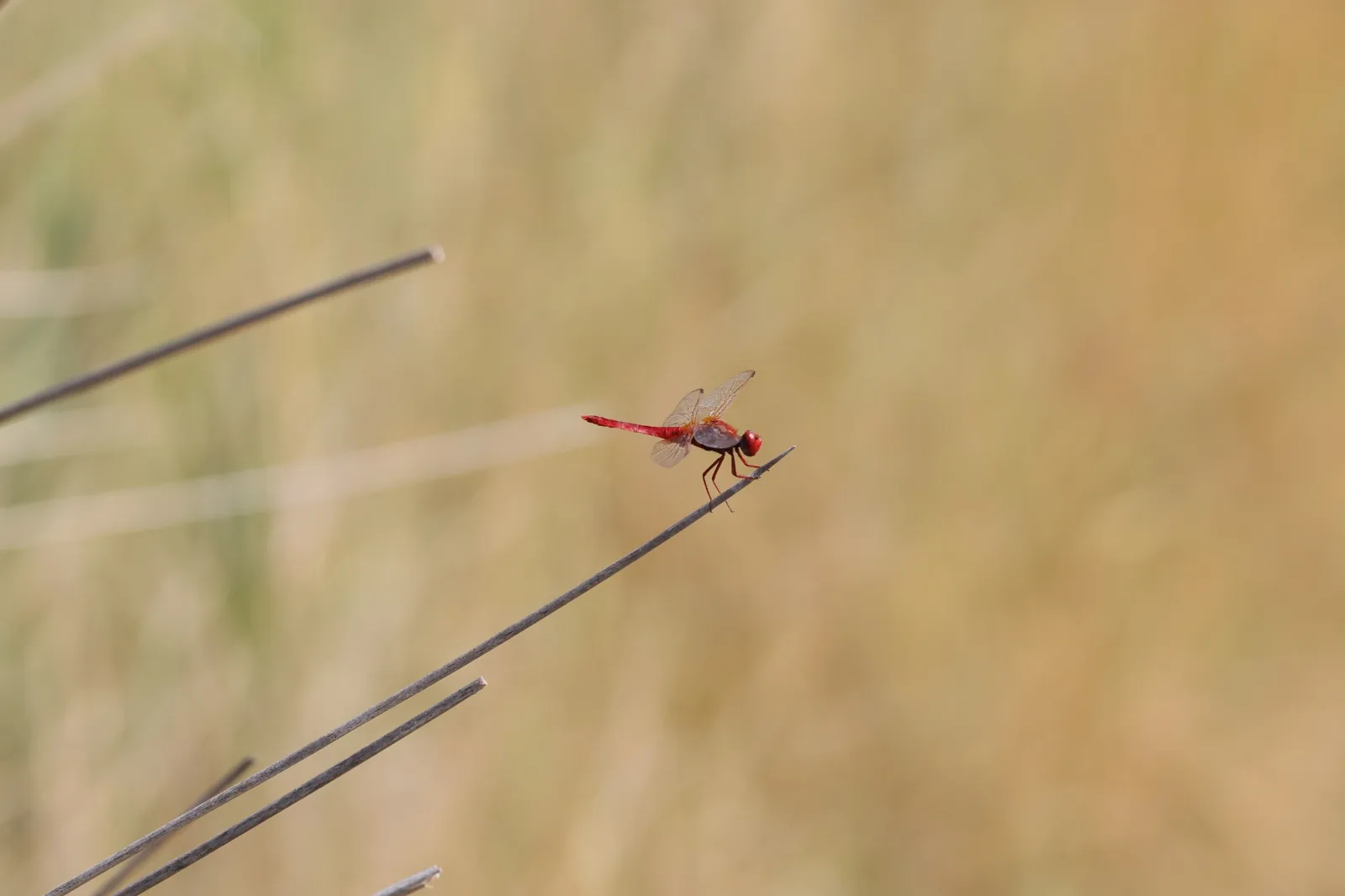
The simplest difference is usually seen when the insect lands. The dragonflies they usually keep all four wings spread out to the sides. The damselflies, instead, they usually fold them together over the abdomen or keep them very close to each other.
It is a rule of thumb, not an absolute norm: there are exceptions within both groups. Even so, for a first identification it is usually one of the most useful clues.
Body, eyes, and flight: other differences
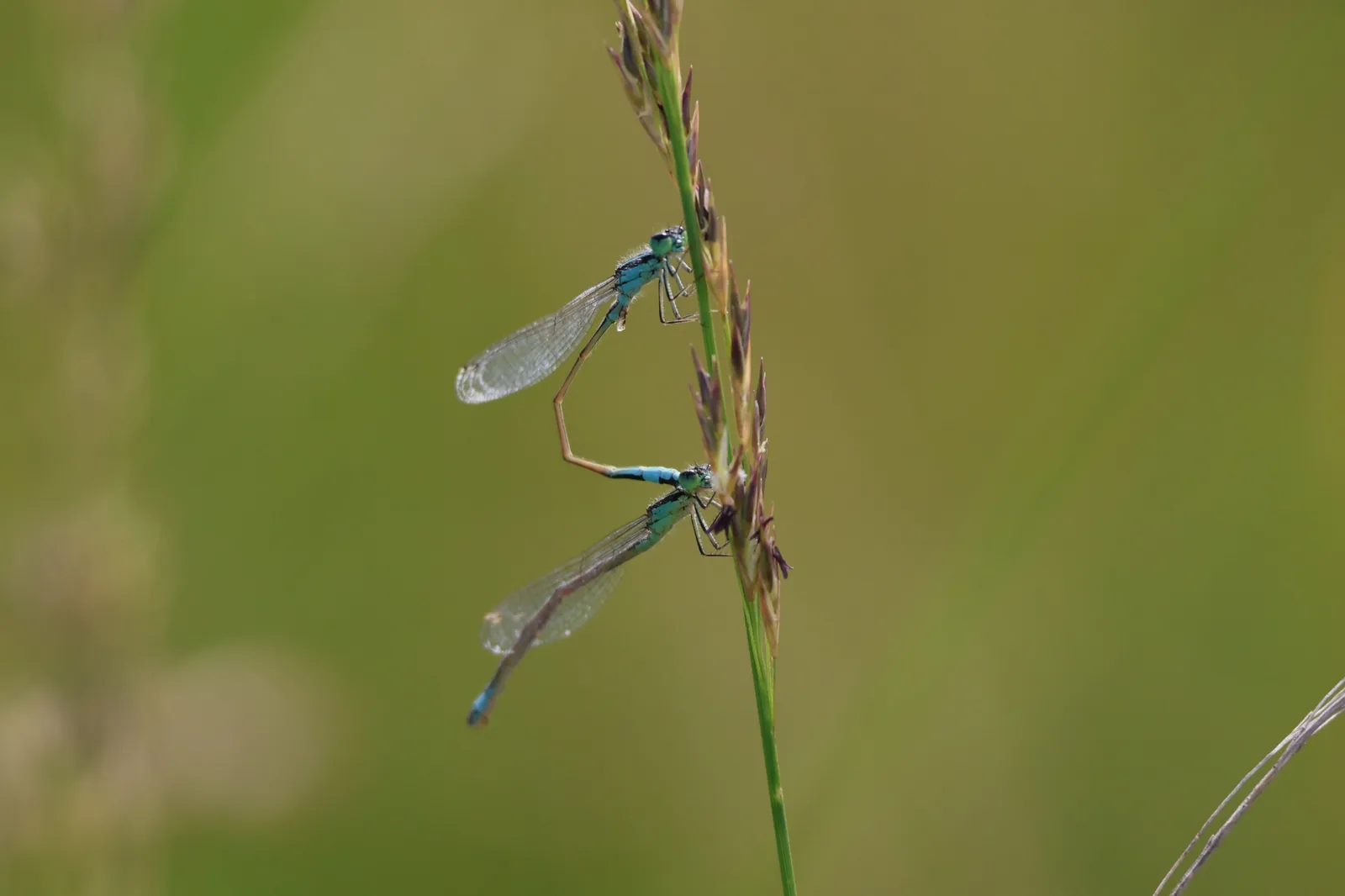
The body also gives many clues. Damselflies are usually finer and more delicate, while dragonflies generally have an appearance more robust.
If we can see the head well, there is another very useful difference. In damselflies the eyes are clearly separated on both sides of the head. In dragonflies, they are much larger and, in most species, end up touching each other or remain very close to one another.
.JPG)

It is also noticeable in the air. Dragonflies usually have a faster, more powerful, and direct flight; damselflies, a lighter and less energetic one. These characteristics provide guidance, although identifying a specific species requires other traits.
At a glance: If it has a very slender body, eyes set far apart, and folds its wings when resting, you are probably looking at a damselfly. If it is sturdier, has very large eyes, and rests with its wings open, it is probably a dragonfly.
Dragonflies and damselflies in the Ballesteros Lagoons
Both groups can be observed in the Ballesteros Lagoons, associated with the vegetation and wetlands. Their life is closely tied to water: although the adults are the ones we see flying, their development begins in an aquatic larval phase.
That is why observing odonates is also a way to get closer to how the wetland works. In LIFE Ballesteros, it is planned to study the fauna of aquatic and terrestrial arthropods, including these insects, as part of the monitoring of the area's biodiversity.
If you want to know more about their life cycle and why they can provide information on the state of wetlands, you can also read “Dragonflies and damselflies: a life between water and air”.
You can also find out about the planned actions to restore the wetland on the page of LIFE Ballesteros project.
External images used for educational purposes only to show eye detail. The rest of the photographs in the article belong to the Ballesteros Lagoons.
 Spanish
 English
 French
 German
 Italian
 Portuguese