
Las Lagunas de Ballesteros: a living karst 20 minutes from Cuenca
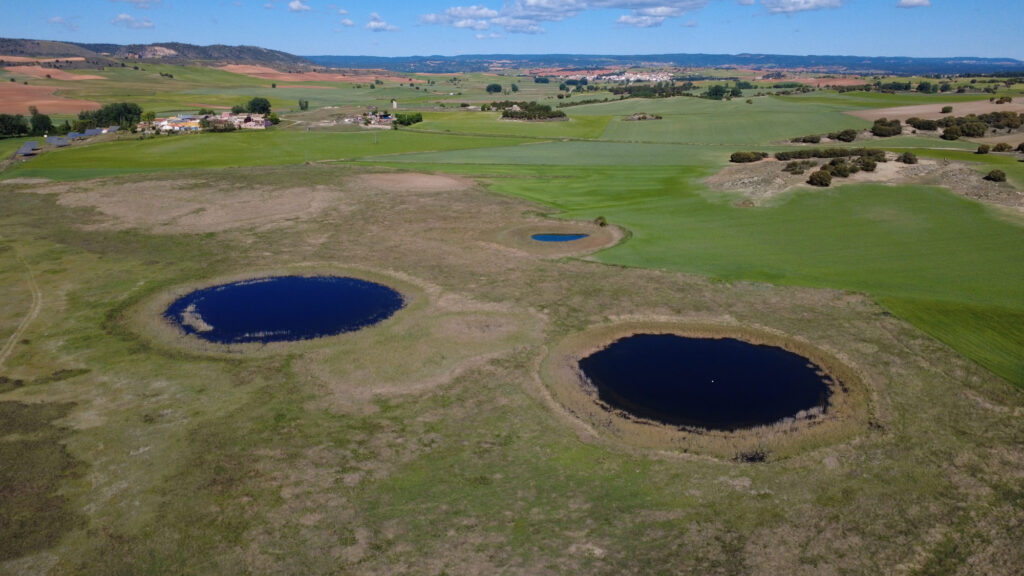
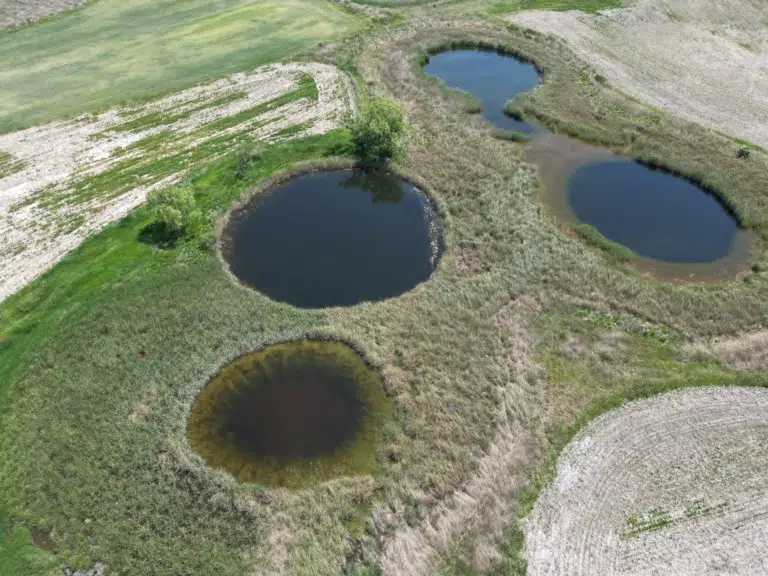
In the middle of the Cuenca plain, between the municipalities of Arcas, Valdetórtola, and Villar de Olalla, lies a place that seems to be from another continent. More than thirty perfect circles, like small cenotes, dot the landscape. These are the Ballesteros Lagoons, an active karst system on gypsum, a geological rarity in Europe.
Here, water seeps in, dissolving the rock from within, and suddenly the ground collapses. This is how sinkholes are born. And when several join together, they become uvalas. What's amazing is that, unlike other karst formations that take millennia to form, here the process happens in decades. The last sinkhole appeared less than 20 years ago. This is still alive.
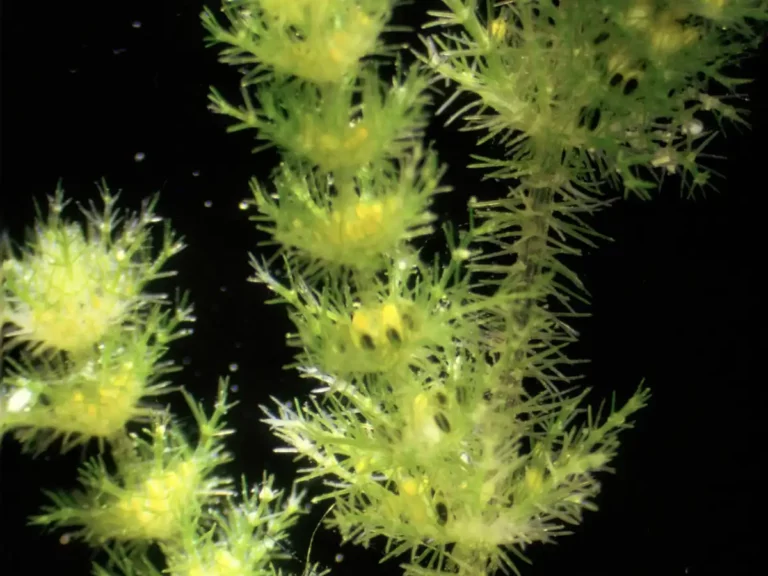
But for decades, the expansion of irrigated agriculture drew water from the very same aquifer that feeds the lagoons. The water level dropped. The floodplain dried up. Cereal and sunflower crops took over 86% of the protected area. Where charophytes—the algae that made Ballesteros the most biodiverse wetland in Spain—once thrived, only small patches remain today. The common sedge, the plant that forms peatlands and provides shelter for dozens of species, survives in isolated patches.
The deterioration was not the work of anyone in particular. It was the result of a development model that for decades prioritized irrigation without considering its consequences. But now, a European project coordinated by Fundación Global Nature has decided to change course. With co-financing from the Provincial Council of Cuenca and Redeia, and the collaboration of the Regional Government of Castilla-La Mancha and the municipalities of Arcas, Valdetórtola, and Villar de Olalla, LIFE Ballesteros is committed to a clear strategy: to purchase agricultural land that exerts the most pressure on the aquifer.
Preliminary agreements are already in place with landowners to acquire 273 hectares, or 94.1% of the reserve. Once acquired, the drainage systems will be removed, the irrigation pivots will be dismantled, and 1,000 cubic meters of debris will be cleared. Water will return to the plain. Temporary flooding will be restored across 120 hectares. And natural habitats will increase ninefold.
But the restoration won't happen on its own. 250,000 marsh grass plants, the emblematic species of this wetland, will be planted. The riverbank forest of the San Martín River will be recovered. And work will be done with local farmers to reduce fertilizer use on 500 hectares, because conservation cannot be understood without those who inhabit the territory.
That's why the project will also open an interpretive trail, host 5,000 schoolchildren, and take a traveling exhibition to 50 municipalities. This is because the wetland remains largely unknown to many residents of Cuenca, despite being only 20 minutes from their homes.
The history of the Ballesteros Lagoons is that of many wetlands, lands transformed to produce, which lost their water and their life, and were left forgotten. Now, LIFE Ballesteros he wants to prove that, by acting on the cause of the problem and working with the people of the territory, it is possible to recover even the most degraded ecosystems.
 Spanish
 English
 French
 German
 Italian
 Portuguese